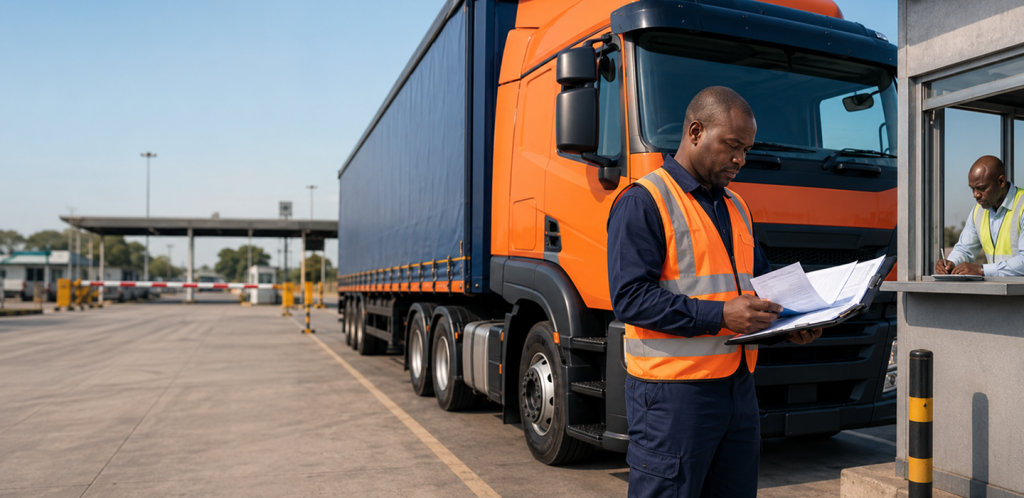
Ask most business owners what their trucks cost to run and you will get an answer about fuel. Ask a second question — what does one loaded kilometre cost, all in — and the answer usually takes longer.
That gap is where fleet profitability disappears. Not in a single bad decision, but in a set of costs that never appear as their own line on a management account and therefore never get managed.
If you run vehicles as part of your business — a manufacturer with a delivery fleet, a mine with haulage capacity, a distributor with a handful of trucks — this is worth an hour of your time.
The costs you already budget for
These are visible, so they get attention:
Fuel
- Driver wages and allowances
- Insurance premiums
- Licensing, permits and road access fees
- Scheduled servicing and tyres
- Vehicle finance or lease payments
Most operators track these reasonably well. If this were the whole picture, fleet costing would be simple arithmetic.
The costs that decide the outcome
Utilisation. A truck that runs at sixty percent of its available capacity costs almost exactly the same to own as one running at ninety. Finance, insurance and licensing do not scale down when the vehicle is parked. Every percentage point of unused capacity raises your effective cost per kilometre on the loads you do run.
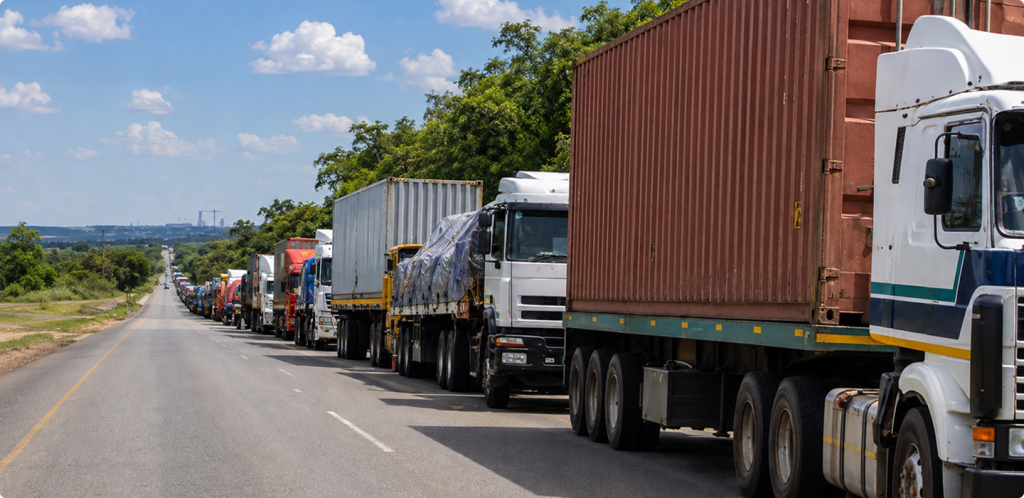
Empty running. A return leg with no load is a leg you pay for and do not bill. On a long corridor route this can be the single largest hidden cost in the operation. Businesses that only move their own goods in one direction are structurally exposed to it.
Downtime. Not just the repair bill. A vehicle off the road is a delivery not made, a customer commitment renegotiated, and sometimes hired-in capacity at short-notice rates. The repair invoice is often the smallest part of what a breakdown costs.
Unscheduled maintenance. The gap between a planned service schedule and what actually happens on rough roads with heavy loads. This is the line most operators under-budget, and it grows quietly as a fleet ages.
Driver management. Recruitment, training, licence compliance, leave cover, and the supervision required when drivers are unaccompanied across borders for days at a time. This is a management cost, not a wage cost, and it lands on someone whose job description is usually something else.
Compliance administration. Permits, insurance renewals, fitness certificates, cross-border documentation. Someone in the business spends real hours on this every month. It rarely gets costed.
Capital tied up. A truck is a substantial asset that depreciates while it sits. The same capital deployed in stock, plant or receivables might return more. This is not an accounting entry, but it is a real cost of the decision.
Reputational cost of a missed delivery. Difficult to quantify, impossible to ignore. One late load to a major customer can cost more than a year of the savings you thought you were making by running your own trucks.
Work out your real number
The exercise is straightforward and most businesses have never done it.
Take twelve months of history. Add every cost associated with the fleet — the visible list and, as far as you can, the hidden one. Include the finance, the depreciation, the admin time at a realistic hourly rate, the hired-in capacity, the repairs.
Divide by the total kilometres actually travelled. That is your cost per kilometre, including empty running.
Then divide instead by loaded kilometres only. The difference between those two numbers is what empty running is costing you.
Now compare that loaded figure against what a transporter would charge you for the same route. Not the headline rate — the delivered rate, including their fuel, their risk and their compliance burden.
Some businesses find they are competitive. Many find they are not, and did not know it. Either answer is useful. Not knowing is the only bad outcome.
Three ways to structure it
Run your own fleet. Makes sense when you have consistent volume in both directions, routes that repeat, cargo that needs specialised handling, or a service requirement no third party will match. You get control. You pay for it in capital and management attention.
Use freight brokerage. You keep no assets. Capacity is sourced against your loads as they arise, and you pay per movement. This works well for variable or seasonal volume, and for businesses that would rather deploy capital into their core operation than into vehicles. The trade-off is that you are dependent on the quality of the broker’s carrier network.
Outsource fleet management. You keep the vehicles and hand over the running of them — maintenance scheduling, compliance, driver management, utilisation and route planning. This suits businesses that need or want to own the assets but do not want transport operations to consume their management capacity. It is often the right answer for a fleet that has grown past what an owner can personally oversee but is not large enough to justify a dedicated internal transport department.
How to decide
Three questions get you most of the way there:
Is your volume consistent enough to keep a truck utilised? If not, ownership is expensive.
Can you fill the return leg? If not, someone else’s network probably can, and that is worth paying for.
Is transport a core capability for your business, or a necessary function? If it is core, invest in it properly. If it is a function, the question is who runs it best — and that is not automatically you.
The worst position is the middle: owning vehicles, running them below capacity, and managing them off the side of someone’s desk. That combination pays the full cost of ownership without the benefits.
Samura Logistics offers fleet management, freight brokerage and cross-border haulage — so the answer to “own it or outsource it” does not have to be all or nothing. Talk to our team about what your current fleet is actually costing you.